Standard Chartered Eyes $4T in Tokenized Assets by 2028
Standard Chartered forecasts tokenized assets will reach $4 trillion by 2028, a surge the bank says will drive major demand for blockchain-native lending and trading infrastructure. The projection highlights growing institutional adoption of RWA tokenization and DeFi protocols.
Yuri Konnov

Geoffrey Kendrick, Standard Chartered's global head of digital assets research, published a forecast on May 18, 2026, projecting that tokenized assets on public blockchain networks will reach $4 trillion by the end of 2028 — a figure that consolidates two projections Kendrick had maintained separately, with $2 trillion attributed to stablecoins and $2 trillion to tokenized real-world assets. The report, covered by The Block's Standard Chartered analysis, argues that the scale of assets moving on-chain will materially increase throughput for blockchain-native lending and trading infrastructure.
Kendrick identified three channels through which tokenization drives DeFi activity: a larger base of on-chain assets, a growing share of those assets deposited into DeFi protocols, and increased lending against on-chain holdings. He argued that mature DeFi protocols with strong risk metrics will be the primary beneficiaries of this shift. The bank emphasized composability — the capacity of a tokenized asset to simultaneously earn yield, serve as collateral, and remain liquid — as the structural property that distinguishes on-chain infrastructure from legacy settlement rails.
Kendrick cited BlackRock's BUIDL fund as the clearest proof of concept. The $2.85 billion tokenized Treasury fund earns Treasury yield, converts to sBUIDL for DeFi compatibility, and serves as core reserve collateral for Ethena's USDtb and Ondo's OUSG. That multi-function capability — yield, collateral, and liquidity in a single instrument — is the structural property the bank argues legacy settlement rails cannot replicate.
The report also pointed to existing DeFi infrastructure as evidence that institutional-grade throughput is already present. Aave — which Standard Chartered described as the largest DeFi lending protocol, once ranking 38th among U.S. banks by asset size — recorded daily on-chain stablecoin lending volumes of $1.5 billion to $2 billion at peak. A separate lending product built jointly by Coinbase and Morpho, where Coinbase provides front-end and custody services and Morpho supplies the lending logic, liquidation engine, and capital pool, had accumulated approximately $1.75 billion in loans across 22,000 borrowers as of May 18, 2026.
On the regulatory side, Kendrick identified passage of the CLARITY Act as the most significant near-term catalyst for accelerating the shift from traditional rails to DeFi. The bill cleared the Senate Banking Committee by a 15-9 vote on May 14, 2026, and was advancing toward a full Senate floor vote at the time the report was published. The bank's view is that legislative clarity on digital asset classification would remove a primary compliance barrier for institutional participants considering DeFi protocol exposure.
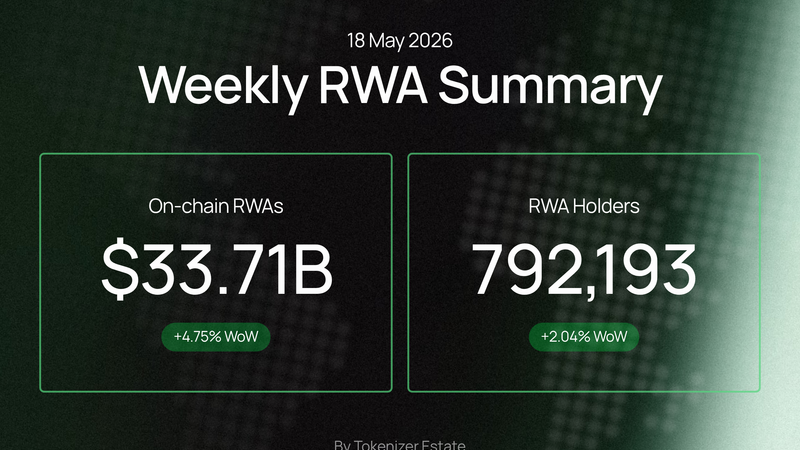
Standard Chartered's $4 trillion figure for end-2028 sits within a longer-range projection the bank has also maintained: a $30 trillion tokenized asset market by 2034, as reported by Bitcoin.com News in May 2026. The near-term forecast is notable because it arrives against a current on-chain RWA market that, while growing rapidly, remains a fraction of the projected total. The bank reaffirmed its RWA projection in April 2026 following a $292 million DeFi exploit, arguing the sector was "bent, not broken" — a position the May 18 report reinforces without revision.
The report does not specify which asset classes within the $2 trillion RWA tranche will account for the largest share of growth, nor does it identify which DeFi protocols beyond Aave and the Coinbase-Morpho product are expected to capture institutional inflows. It does not disclose the methodology used to derive the 50/50 stablecoin-to-RWA split, the assumed regulatory timeline for CLARITY Act passage, or the projected contribution of any single jurisdiction to the $4 trillion total.
The immediate effect of the May 18 report is a published institutional forecast that frames DeFi protocols as core infrastructure for tokenized financial markets, not peripheral venues. What the report does not establish is a live product mandate, a client deployment, or a commitment by Standard Chartered itself to route assets through any of the DeFi protocols it cites. The bank has not disclosed whether it holds positions in BUIDL, Aave, or the Coinbase-Morpho lending product, and the forecast carries no binding commercial obligation on any named counterparty.