Grant Cardone's $5 Billion Tokenization Play: What It Actually Means for Real Estate On-Chain
The loudest voice in real estate just announced the largest single-entity property tokenization in history. But behind the $5 billion headline lies a more complex — and more consequential — story.

The loudest voice in real estate just announced the largest single-entity property tokenization in history. But behind the headline number lies a more complex — and more consequential — story.
On February 26, Cardone Capital confirmed plans to tokenize its entire $5 billion real estate portfolio — 14,200 apartment units across 43 multifamily properties and over 500,000 square feet of commercial office space. If executed, it would become the single largest tokenization of an existing real estate portfolio to date, dwarfing previous benchmarks: RedSwan's $2.2 billion pipeline, Securitize's $4 billion across multiple fund issuers, and RealT's $150 million in tokenized multifamily.
But what makes the Cardone announcement structurally significant isn't the number. It's the architecture behind it.
The Technical Bet: ERC-1400 and a Regulated Secondary Market
Cardone Capital intends to use the ERC-1400 security token standard — a framework originally developed by Polymath that enables programmable compliance. Unlike generic ERC-20 tokens, ERC-1400 embeds investor verification and transfer restrictions directly into the smart contract layer. This means KYC/AML checks, accreditation status, and jurisdictional restrictions can be enforced on-chain, without relying on centralized gatekeepers at every transaction.
The firm is evaluating Ethereum Layer 2 networks for throughput and gas optimization, and has publicly solicited partnerships from Solana, Avalanche, Polygon, and Aptos. Notably absent from Cardone's shortlist: XRP Ledger — despite Ripple's aggressive push into real estate tokenization and the XRP Ledger's recent addition of $1.3 billion in tokenized RWA value in just the first two months of 2026.
The regulatory framework will combine Regulation D (for U.S. accredited investors) and Regulation S (for international participants) — the same dual-track structure used by most institutional-grade security token offerings. What's different is the scale: applying this to a $5 billion operating portfolio, not a single-asset SPV.
The company targets a compliant secondary exchange platform launch by mid-2026 — a critical milestone. Secondary liquidity has been the industry's persistent bottleneck. If Cardone delivers a functioning marketplace for trading tokens backed by real, cash-flowing multifamily assets, it would set a precedent that no pilot project has yet achieved.
Context: The Bitcoin-Real Estate Hybrid Strategy
The tokenization announcement doesn't exist in a vacuum. It's the third phase of a deliberate Cardone Capital strategy that began in mid-2025.
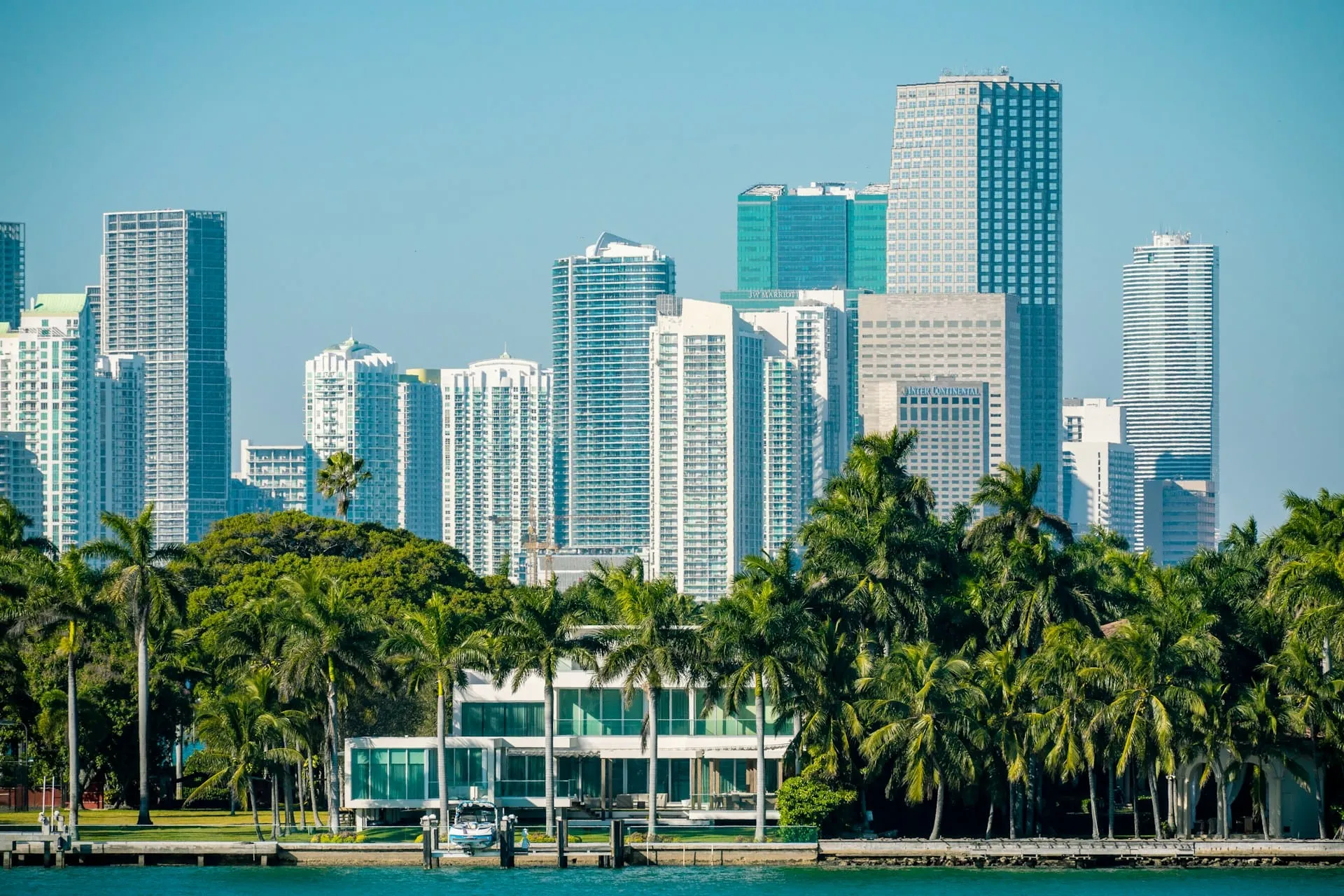
In June 2025, the firm purchased 1,000 BTC (approximately $101 million at the time) and launched the 10X Miami River Bitcoin Fund — a dual-asset vehicle combining a 346-unit multifamily property on the Miami River with a $15 million Bitcoin allocation. The thesis: use stable real estate cash flow and rental income to continuously accumulate Bitcoin, while Bitcoin provides asymmetric upside. The fund targets 4,000 BTC total.
By February 2026, Cardone publicly stated he was adding more Bitcoin despite price volatility, predicting that hybrid real estate-crypto funds would outperform traditional REITs.
The tokenization of the broader portfolio is the logical next step: if you already believe real estate and digital assets are converging, putting the real estate itself on-chain completes the loop. Investors get fractional exposure with secondary liquidity; the firm gets a new capital formation channel beyond traditional Reg D fundraising.
To date, Cardone Capital has raised over $1.9 billion in equity from nearly 20,000 investors across 27 funds since 2016 — with zero principal losses reported. Tokenization could dramatically expand that investor base by lowering minimums and opening cross-border access via Regulation S.
Why This Is Different from Previous Tokenization Announcements
The real estate tokenization space has seen no shortage of announcements. Most of them share a pattern: a new platform tokenizes a single asset or a small portfolio, raises capital from crypto-native investors, and then struggles with secondary liquidity.
Cardone's move breaks the pattern in three ways.
Existing, cash-flowing portfolio. This isn't a development-stage project or a speculative fund raise. These are 14,200 occupied apartment units generating real rental income. The underlying assets are already performing.
Existing investor base. With 20,000 existing investors, Cardone doesn't need to find a market. He needs to give his current investors a better instrument — one with liquidity, transferability, and potentially lower administrative overhead.
Brand-driven distribution. Grant Cardone has 4.8 million Instagram followers, 2.3 million YouTube subscribers, and a media presence that dwarfs any tokenization platform's marketing budget. The distribution problem — how do you get non-crypto investors to care about tokenized real estate — becomes significantly smaller when the issuer already has direct access to millions of potential investors.
The Risks: What Could Go Wrong
Scale introduces complexity. Tokenizing a $5 billion portfolio across 43 properties means navigating 43 different sets of property-level legal structures, potentially across multiple states and jurisdictions. Each property may have existing lender covenants, LP agreements, and regulatory constraints that complicate on-chain representation.
The ERC-1400 standard, while purpose-built for security tokens, has limited production-scale precedent at this volume. Most implementations to date have involved single-asset issuances or fund-level tokens — not a portfolio-wide conversion.
And the secondary market promise remains the biggest open question. Thin liquidity has plagued every tokenized real estate marketplace launched so far. Even tZERO and INX, with institutional backing, have struggled to generate consistent trading volume. Cardone's brand may drive initial interest, but sustained secondary market activity requires market makers, regulatory clarity on broker-dealer obligations, and — critically — enough token holders willing to trade rather than hold for yield.
Market Implications
If Cardone executes this successfully, the signaling effect matters more than the $5 billion figure itself.
It would demonstrate that tokenization is not a fintech experiment for startups — it's a viable capital markets strategy for established real estate operators managing billions. It would validate the ERC-1400 standard at meaningful scale. And it would prove (or disprove) whether a large, brand-driven issuer can solve the liquidity problem that has held back the sector for years.
The timing is not coincidental. Deloitte projects $4 trillion in tokenized real estate by 2035. BlackRock's BUIDL fund has crossed $2.5 billion. The total RWA market just surpassed $26 billion. The infrastructure is maturing. What the industry needs now is not another platform — it's a high-profile issuer willing to go all-in with an existing portfolio.
Grant Cardone appears to be making that bet.